


Yeongdo Lighthouse
IALA Heritage Lighthouse of the Year 2026 Nominee
Location: Republic of Korea, Yeongdo-gu, 181 Jeonmang-ro
Lighthouse Operator: Ministry of Oceans and Fisheries, Busan Regional Office of Oceans and Fisheries
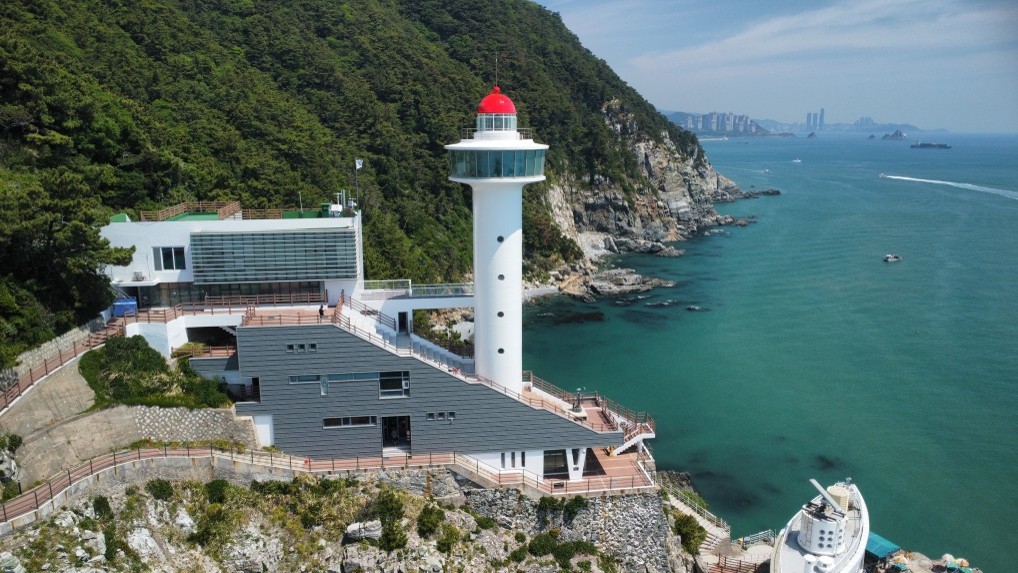
Source: (photos as submitted to accompany nomination form submitted by Korea Institution of Aids to Navigation 2026)
Lighthouse Description and History
Geographical Characteristics
Yeongdo Lighthouse is located at the tip of the coastal cliffs of Taejongdae (Dongsam-dong), Yeongdo-gu, Busan Metropolitan City. The Taejongdae area borders the Korea Strait and lies adjacent to the main route used by vessels entering Busan Port, which makes it a geographically important site for a Marine Aid to Navigation (AtoN) supporting the safe navigation of ships.
After Busan Port opened in 1876, the number of domestic and foreign vessels using the port grew steadily, and so did the need for AtoN facilities to support safe arrivals and departures. Accordingly, on 1 December 1906, the present Yeongdo Lighthouse was first lit under the name “Jeolyeongdo Lighthouse.” The lighthouse’s name changed several times over the following decades. In 1932 it was renamed “Mokdo Lighthouse,” and from 1957 to 1974 the names “Jeolyeongdo Lighthouse” and “Mokdo Lighthouse” were used interchangeably in official documents and among the public. After this transitional period, the name was finally changed to the current “Yeongdo Lighthouse” in 1974.
Architectural Characteristics
When first built in 1906, Yeongdo Lighthouse was a white, square concrete structure with a height of 26 cheok (approx. 7.8 m). It was built using concrete, a new construction technology at the time, to make it strong enough to withstand sea winds and salt damage.
The lighthouse tower was gradually enlarged in step with the growth of Busan Port and changes in the AtoN environment. The tower, originally 7.9 m tall, was raised to 9.8 m through an extension on 3 September 1957, and was rebuilt once more to 11.4 m on 11 January 1991. Having guided vessels for nearly a century through these three stages, the lighthouse eventually required upgrading because the facilities had aged and the vessels passing through had grown steadily larger.
Accordingly, in November 2004, a new 35 m white, cylindrical reinforced-concrete tower was built to replace the old one. The new tower’s design takes its motif from the shape of a rising candlestick and torch, and it uses modern seismic- and wind-resistant structural design to withstand strong wind pressure on the coastal cliff and earthquakes. When it was rebuilt in 2004, Yeongdo Lighthouse went beyond the role of a simple AtoN facility. It was developed as a “Lighthouse Maritime Culture Space” that combines a lighthouse building (total floor area 995 m²), exhibition halls (a Maritime Culture Space and a Natural History Exhibition Hall), a rest area, and an outdoor sculpture garden. The project is regarded as a leading example of modern lighthouse architecture because it turned a traditionally closed lighthouse site into an open, multi-purpose cultural facility where citizens and visitors can enjoy maritime culture.
Technical Characteristics
When first lit in 1906, Yeongdo Lighthouse used a kerosene-fuelled light source. It functioned as a visual aid, using a rotating lantern to indicate the lighthouse’s position to vessels. As power supply and AtoN technology advanced, the light source, lantern and related equipment were continuously improved.
Today, Yeongdo Lighthouse uses a rotating lantern that emits flashes at a fixed period. Its light character is three white flashes every 18 seconds (Fl(3) W 18s), and its geographical range is 24 nautical miles, providing visual position information for vessel navigation.
The lighthouse has also operated a sound signal for times when visibility is restricted by sea fog or mist. Korea’s first fog horn was installed alongside the light, and an electric sound signal now provides acoustic signals at regular intervals.
The lighthouse’s AtoN functions are not limited to light and sound; they have also expanded to navigation support using radio waves. In 1999, a DGPS reference station was established to provide vessels with precise position information. AIS-based AtoN functions were later added to further improve the navigational information it provides.
Since its establishment in 1906, Yeongdo Lighthouse has continuously improved its facilities and functions in line with changes in AtoN technology, including its light source, lantern, sound signals and radio aids. It continues to operate as an AtoN facility that supports the safe navigation of vessels sailing near Busan Port.
Reason For Nomination
Intrinsic Heritage Interest of the Lighthouse:
Yeongdo was long home to a horse-breeding ranch. It was once called “Jeolyeongdo (絶影島),” meaning “the island where no shadow can be seen,” because its horses ran so fast that their shadows could not be seen. Taejongdae, at the southern tip of Yeongdo, is an area of well-developed coastal cliffs and wave-eroded landforms, and it is currently managed as a nationally designated Scenic Site. Yeongdo Lighthouse was first lit on 1 December 1906 under the name “Jeolyeongdo Lighthouse” to support the safe navigation of vessels entering and leaving Busan Port. It was renamed “Mokdo (牧島) Lighthouse” in 1932. The two names were then used interchangeably from 1957 to 1974, until the current name, “Yeongdo Lighthouse,” was settled in 1974. These changes in name follow the history of the place names of Yeongdo itself.
The architectural and technical value of Yeongdo Lighthouse lies in its more than 100-year evolution alongside the development of Busan Port. The tower was first built in 1906 as a white, square concrete structure 26 cheok (approx. 7.9 m) high. It was extended to 9.8 m in 1957 and to 11.4 m in 1991 in response to the growth in Busan Port’s cargo volume and changes in the Marine Aid to Navigation (AtoN) environment. In November 2004 it was reborn as a new 35 m white, cylindrical reinforced-concrete tower, taking on its present imposing form.
Technically, the lighthouse has advanced from its original kerosene light source to a modern rotating lantern (Fl(3) W 18s). Its sound signal has changed from a fog horn to an electric sound signal, and it has become a hub for radio aids through its DGPS reference station and AIS integration. As a result, it holds unique value as a historical record that shows the development of modern AtoN technology in a single place.
Conservation:
Yeongdo Lighthouse is a heritage asset of high preservation value. Its construction and transformation are systematically documented through AtoN history cards, as-built drawings, facility management records and photographs from each period, accumulated since it was first lit in 1906.
The complex built during the 2004 reconstruction consists of three integrated buildings with a total floor area of 972 m²:
- the tower and operations building (6 stories above ground),
- the maritime exhibition gallery (1 story),
- the equipment and rest building (2 stories).
The complex is a good example of a lighthouse site successfully turned into a public cultural asset. It firmly keeps its advanced AtoN functions while combining them with exhibition, rest and viewing functions. The facilities are in excellent condition. They offer a sustainable preservation and utilization model for modern lighthouse architecture, in which AtoN functions and public cultural space coexist.
Public Access and Education:
Because Yeongdo Lighthouse is located in Taejongdae, the general public can visit it directly and enjoy the lighthouse facilities and maritime cultural space along with the surrounding natural scenery. Busan Metropolitan City also promotes the lighthouse, on the Taejongdae coast, as a major tourist and cultural attraction.
The Lighthouse Maritime Culture Space at Yeongdo Lighthouse includes a maritime library, a gallery, a performance venue and an observatory. According to the Busan Regional Office of Oceans and Fisheries:
- the maritime library holds books on maritime topics,
- the gallery displays maritime cultural and artistic works,
- the observatory offers views of the surrounding coastline and sea,
- visitors can see an exhibition on the history of ships along the tower staircase.
Various maritime cultural and art exhibitions have also been held for visitors to Taejongdae and Yeongdo Lighthouse at the Lighthouse Maritime Culture Space, created in 2004. Cultural and artistic activities using the lighthouse facilities continue, such as the Korea Lighthouse Photo Contest exhibition held at the lighthouse’s “Sea&See Gallery.”
Yeongdo Lighthouse therefore has value in terms of public access and utilization. It opens an AtoN facility to the public and, through its exhibition spaces, library, gallery and performance venue, lets people experience lighthouses and maritime culture together.
Photos and Diagrams
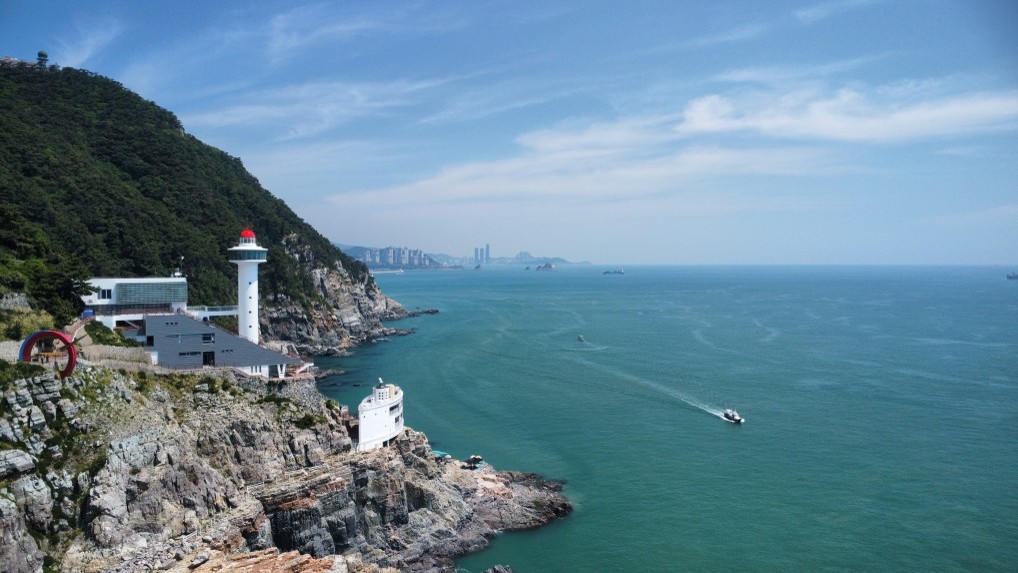
Yeongdo Lighthouse
Source: (photos as submitted to accompany nomination form submitted by Korea Institution of Aids to Navigation 2026)