Longstone Lighthouse
IALA Heritage Lighthouse of the Year 2026 Nominee
Location: UK, Northumberland, Farne Islands, Longstone Rock
Lighthouse Operator: Trinity House
Source: Copyright Trinity House
Lighthouse Description and History
- Beautiful and unusual appearance
- 200th Year anniversary
- Associations with nationally-recognised heroine Grace Darling
- Rare example of an offshore lighthouse open to public for tourism and education
- Beautiful protected marine environment
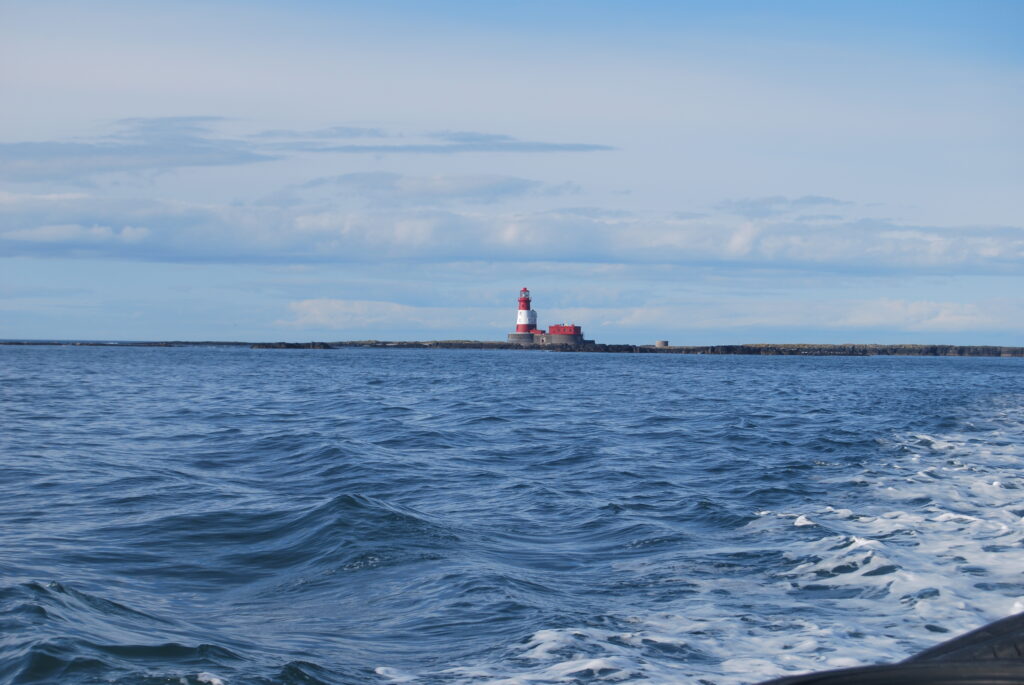
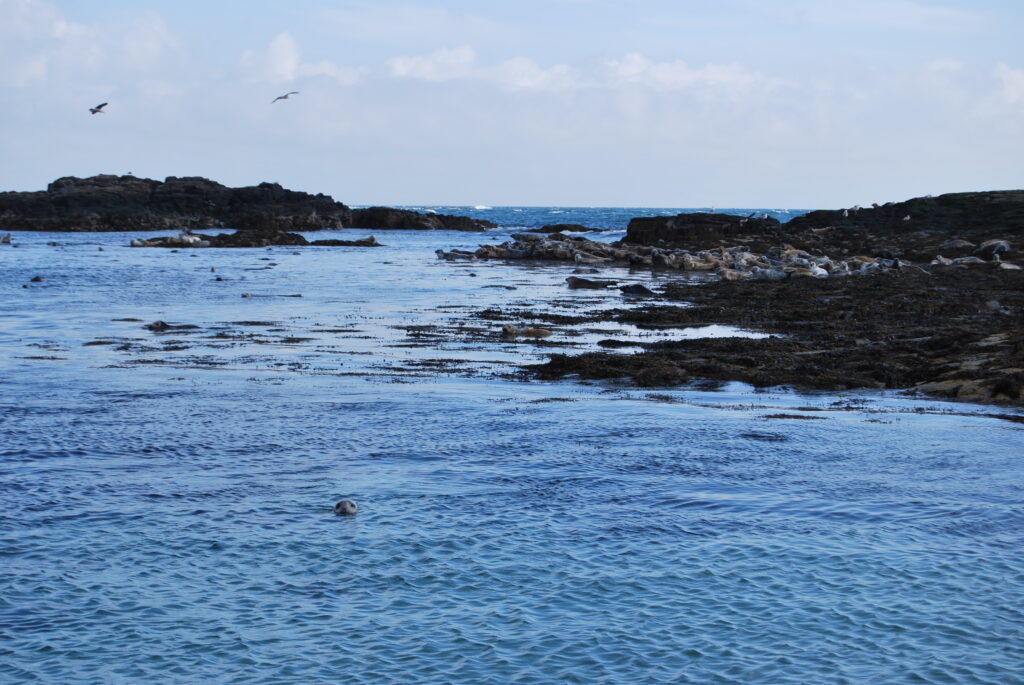
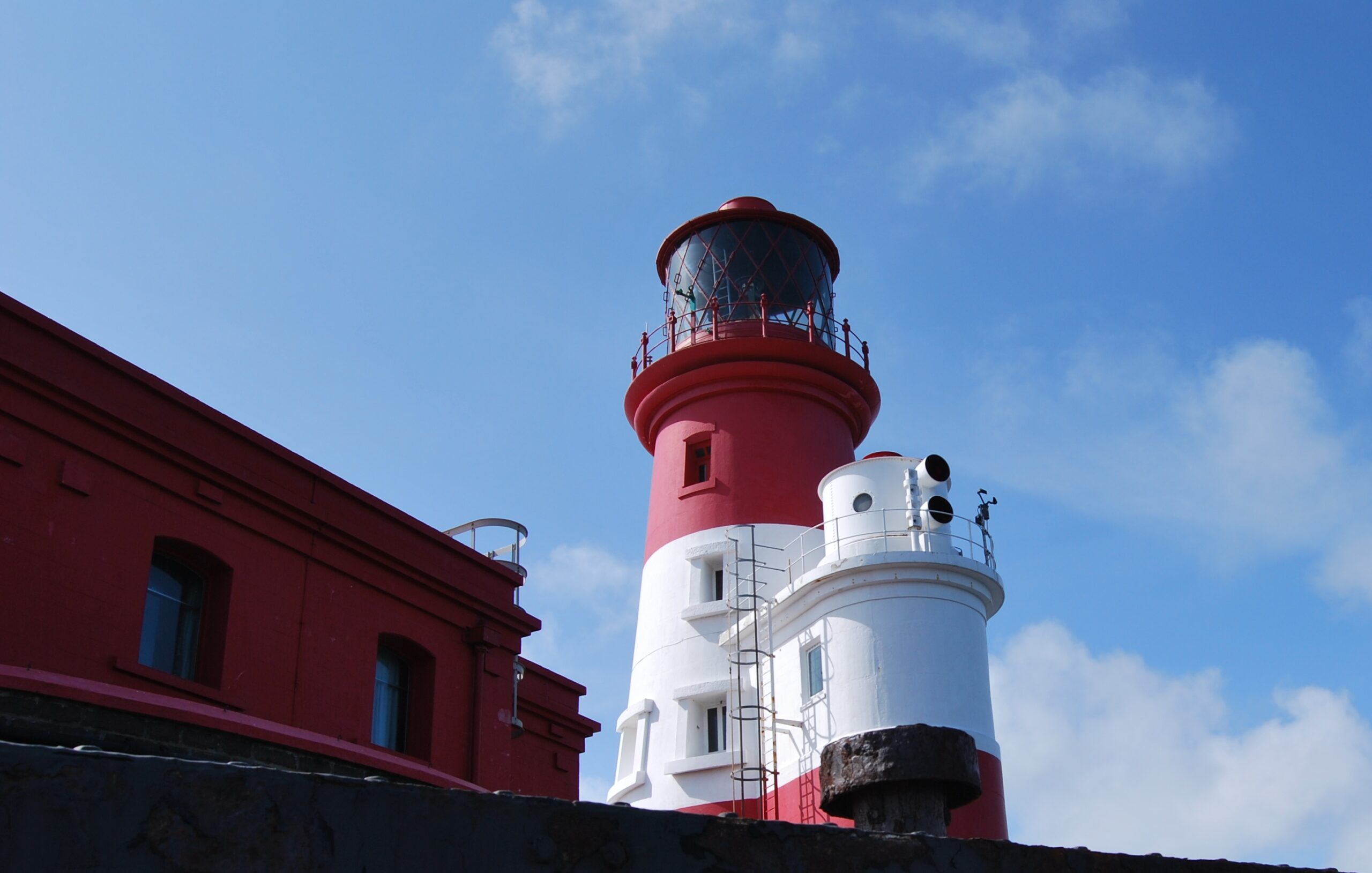
Longstone Lighthouse has stood for 200 years as of 2026. Guarded by Atlantic Grey seals and puffins, the red and white striped tower is an iconic sight set against a wild marine environment. Its light has guided countless souls past the jagged isles since it was first lit by Trinity House in 1826.
In March 1825, Trinity House arranged a visit to survey a possible site for the tower on the rock—the party consisting of the organisation’s Brethren and esteemed engineer Joseph Nelson. Tragically, the very day before the journey, the barque Thomas Jackson was wrecked on Crumstone Rock on 18 March 1825. Despite rescue efforts from inhabitants of nearby Holy Island, four crew and the captain’s wife were lost to the sea.
With great urgency, Trinity House completed the survey, Nelson drew up plans and work on Longstone Lighthouse was underway the very next month. Barracks for the workmen were built on the rock while Nelson, serving as architect for the work, and Foreman Thomas Wade resided on Brownsman Island under the care and hospitality of the lightkeeping family, the Darlings.
Stone for the tower—cut from the Bramley Fall quarry in Yorkshire—arrived at Longstone rock via sloop. The imported stones were dovetailed into each other for increased tensile strength. By December, the work was complete and an optic and lamp was sent for fitting. On 15 February 1826, Trinity House exhibited the navigation light of Longstone Lighthouse for the first time.
Longstone Lighthouse is most famous as the scene of the Forfarshire wreck and the exploits of Grace Darling, a daughter of the keeper in charge. In September 1838 the steamer Forfarshire, bound from Hull to Dundee, went aground on Hawkers Rocks, about a mile from the Lighthouse, when 43 people were drowned; the stern portion of the vessel being split off and carried away in the storm. The forepart, to which clung the survivors, remained fast on the rocks. At daybreak William Darling, the keeper, and the fishermen ashore saw the wreck, but the waves were beating against the rocks so much that the fishermen thought it impossible to attempt a rescue and even Darling hesitated. He was persuaded to make the attempt by his daughter, with her as the second hand in the small lighthouse boat. On reaching the wreck after a terrific struggle they brought back four men and one woman in their frail open boat and later a further four survivors; all 9 had to be accommodated and fed at the lighthouse for two days until the storm abated and they could be taken to the mainland. This gallant action made Grace Darling and her father famous. The Royal Humane Society voted them its gold medal, the Government made them a grant and a public subscription was organised.
Other notable dates:
- 1860 – The Darling family leave Longstone Rock
- 1873 – Trinity House installs 1st Order Chance Brothers optic
- 1876 – Fog signal station constructed on rock
- 1895 – Red stripes added to tower
- 1938 – RNLI opens Grace Darling Museum in Bamburgh
- 1941 – A bomb destroys the fog signal station during the Second World War
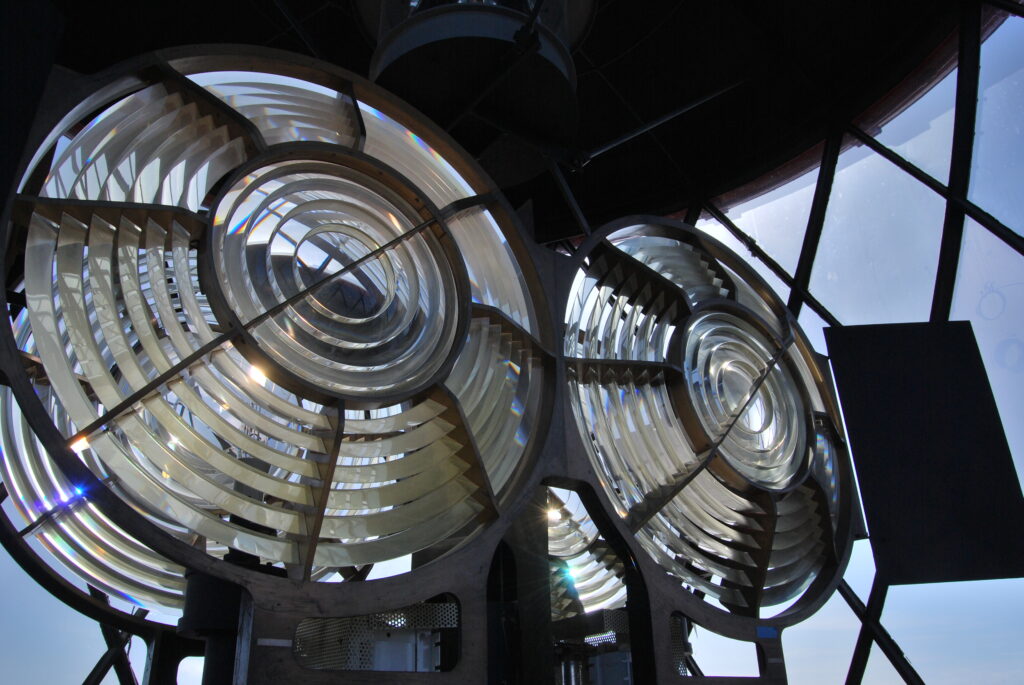
- 1952 – Trinity House converts station to electrical operation, installs 3rd Order catadioptric twin spectacle lens
- 1990 – Light automated, keepers leave Longstone Rock
- 2015 – Solar panel system installed
- 2026 – 200th anniversary of lighthouse
Reason For Nomination
Intrinsic Heritage Interest of the Lighthouse:
- 200 years of continuous operational use by Trinity House – the original builders!
- Rare example of an offshore lighthouse open to the public
- Nationally protected heritage building on the National Heritage List for England
- Unusual ‘spectacle’ optic
Now 200 years of age, Longstone Lighthouse firmly upholds its iconic status across the United Kingdom. Not only are its red and white walls easily recognisable for seafarers sailing by the Northumberland coastline, the station also remains a celebrated landmark for shoreside communities and tourists.
The station’s isolated offshore location necessitates access via boat; as such, Trinity House has a long-standing partnership with a local boat operator to manage access to the lighthouse for employees and tourists. Longstone Lighthouse is the only offshore lighthouse that Trinity House opens to the public.
Longstone Lighthouse and its keepers’ cottages are formally recognised on the National Heritage List for England as a Grade II listed building owing to their architectural significance and historic interest. The operation of a twin spectacle optic is a rarity among modern day Trinity House lighthouses and offers visitors a glimpse into technology of yesteryear.
Conservation:
Trinity House has overseen the maintenance of the tower, cottages and lighting systems on site at Longstone Lighthouse since 1826.
Whilst the core of the lighthouse remains as built in 1826, evidence abounds of the evolution and adaptation of the lighthouse to changing needs and technology. One such example is a former oil store building that was built on the wave-washed rocks to keep its hazardous contents away from the main building. When this was no longer required in the early 19th century, its roof was removed to allow a large Marconi telegraph mast to be placed in the centre of it, the outer walls of the old oil store continuing to protect its contents from the waves. Trinity House has surveyed, recorded and identified all such historical structures to enhance knowledge about these important historical elements and assist in their conservation.
The station must continue to evolve to meet modern requirements (as it has done throughout its 200 year history), but in doing so, Trinity House is very mindful of its custodianship responsibilities for this unique piece of lighthouse heritage. Trinity House has recently adopted a robust approach to conservation through its Built Heritage Asset Policy which has the following objectives;
- To minimise harm to the heritage significance of built heritage assets from works
- To conserve built heritage assets through proactive and responsive maintenance where practical
- To retain heritage assets and their components in use where practical
To promote Trinity House’s built heritage and develop its cultural aspects where such opportunities exist within operational constraints
Trinity House installed a custom plaque at the lighthouse in February 2026 to mark the 200th anniversary of its service since it was first lit by Trinity House on 15 February 2026. The plaque reads “Long may this lighthouse work for the benefit and safety of all mariners in the spirit of Grace and William Darling.”
Public Access and Education:
Despite its isolated location, tours are available of Longstone Lighthouse via a local boat tour operator under licence from Trinity House. The two-hour Longstone tour includes a 30-minute tour of the inside of the lighthouse and a cruise around the Farne Islands (past the neighbouring historical lighthouse of Inner Farne). Visitors receive a full commentary en route. The area is highly protected for its marine habitats – particular bird breeding and seal colonies and the tour manage to integrate built heritage with natural heritage.
As a tourist attraction, the lighthouse is well-received on public review sites such as Tripadvisor. One comment from 2023 reads: “Part of a boat trip tour from Seahouses. This made the story of Grace Darling all the more incredible when the sheer scale of her heroic rescue was apparent while on the boat. The distance from the lighthouse to where the ship wrecked was far more than I’d always imagined. The lighthouse still stands proud and unchanged.”
The boat departs for the lighthouse from the harbour in a small Northumberland fishing village called Seahouses. Not far from Seahouses is Bamburgh, a coastal village where tourists can visit the Grace Darling Museum operated by national life-saving charity the Royal National Lifeboat Institution. In nearby St Aidan’s Church, the Monument to Grace Darling is a frequently visited Victorian Gothic memorial; the Grade II* Listed structure makes it a monument of national importance in England. These popular tourist attractions show the importance of the lighthouse’s story within the community and beyond.